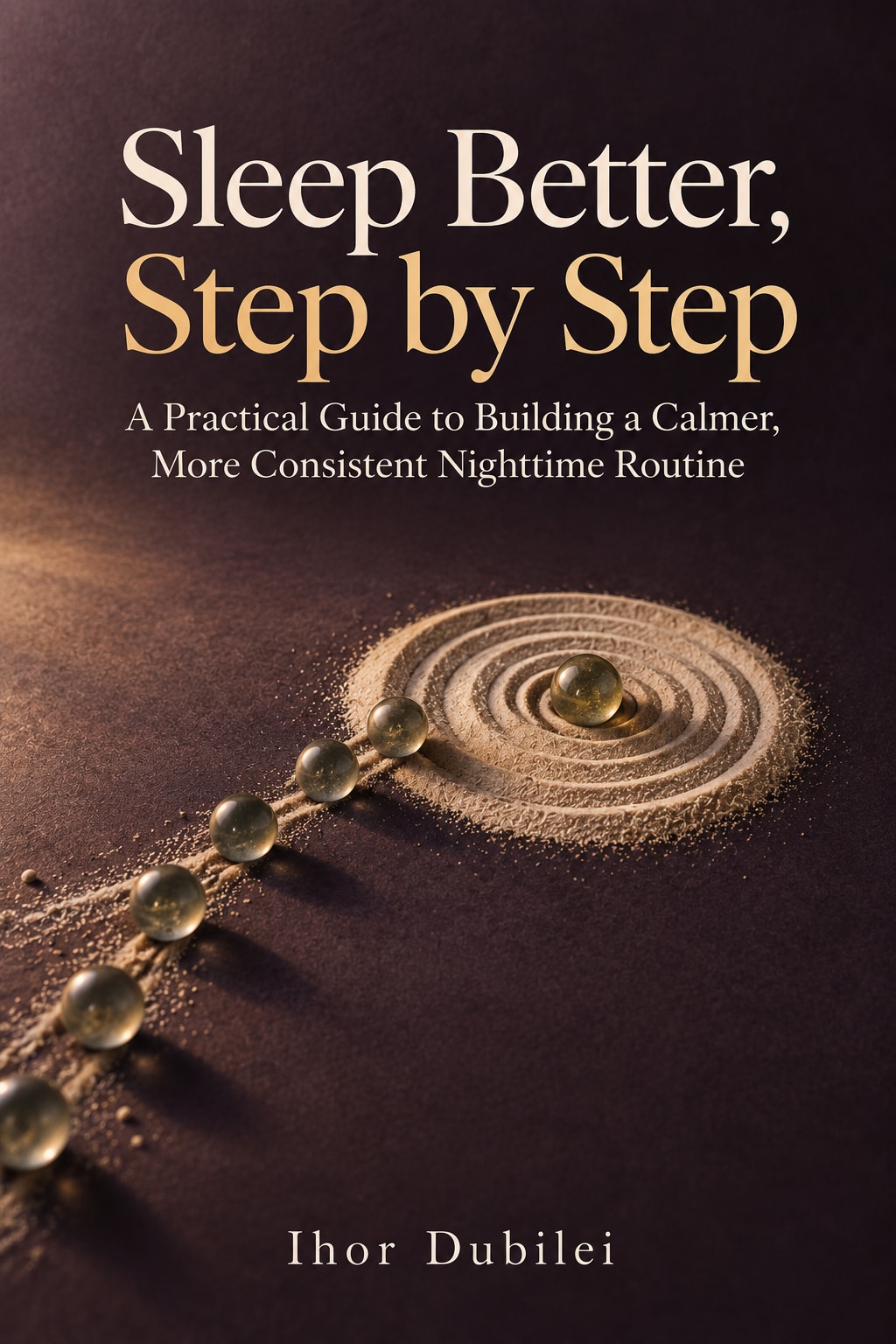
A Practical Guide to Sleep Habits, Timing, Environment, and Better Recovery
By Ihor Dubilei
Learn how sleep timing, light, routines, bedroom conditions, caffeine, alcohol, exercise, and tracking habits can support healthier sleep and better recovery.
Readers move from guessing why they wake unrefreshed to using a structured, evidence-informed process for improving sleep opportunity, daily timing, bedroom conditions, and personal sleep habits. The book does not promise a specific sleep-stage outcome; it helps readers build conditions that support healthier sleep and recognize when clinical evaluation may be appropriate.
Inside the book
01
Chapter 1: What Deep Sleep Is, and What It Is Not
Understand deep sleep as one part of normal sleep, learn why a perfect stage score is not a useful target, and define what a restorative night looks like in your own daily life.
02
Start With Sleep Opportunity
Build the basic conditions for sufficient sleep before trying advanced routines or interpreting stage data.
03
Chapter 3: Set Your Body Clock
Use regular timing and daylight exposure to support a more stable sleep-wake rhythm.
04
Build a Wind-Down That You Will Actually Use
Create a short, repeatable transition from daytime stimulation to bedtime that fits your real schedule, reduces unfinished-task pressure, and supports a calmer start to the night.
05
Use Food, Caffeine, Alcohol, and Nicotine More Intentionally
Recognize common substances and timing patterns that can disrupt sleep continuity and recovery, then make focused changes you can evaluate.
06
Move During the Day, Rest at Night
Find a sustainable relationship between physical activity, exercise timing, naps, and nighttime sleep.
07
Chapter 7: Design a Bedroom for Fewer Disruptions
Improve comfort and reduce avoidable sleep interruptions through practical changes to light, sound, temperature, bedding, and devices.
08
Use Sleep Trackers Without Letting Them Run Your Life
Interpret consumer sleep data cautiously and prioritize patterns in wellbeing over nightly stage estimates.
09
Troubleshoot the most common sleep patterns
Use a structured approach for bedtime delay, racing thoughts, middle-of-the-night waking, early waking, and irregular schedules.
10
Chapter 10: Know When to Seek Clinical Support
Recognize signs that self-guided habit changes may not be enough and prepare for a productive conversation with a qualified clinician.